

Category: Uncategorized

June 15, 2016 by pvanderheide 0 Comments

Positive Parenting

“Terrible twos”; as children grow up they become more opinionated, and explorative – what children are doing is learning about their world. Every experience develops the child’s skills, knowledge, and ultimately their brain. As parents we want to encourage healthy exploration and learning while keeping our children safe. Positive parenting approach encourages parents to support the learning of skills while teaching appropriate social behaviors and expectations. Remember – your child learns through experiences, allow exploration while teaching boundaries:


1. Keep your child active with plenty of outdoor play time every day!


2. Ignore behavior that is boisterous and energetic but is not harmful.


3. Praise your child for good behavior as often as possible during the day, be specific (i.e. NOT “good boy” rather “thank you for being patient when I was on the phone” + hug, kiss…) you cannot praise your child too much!!! Everyone wants to repeat a behavior they are praised for (when your spouse compliments the cloths you are wearing you are much likelier to wear them again).


4. Give your child one on one time every day doing an activity your child enjoys and if possible chooses himself. This can be as short as 5 minutes or as long as your child shows interest.


5. Have home rules (no hitting, no climbing on table) – when your child engages in a behavior that is against home rules give a warning (“hitting is not allowed. If you hit again you will have to have a time out”). If he does it again remove him from the situation and sit him down next to you to “cool down”. Once child calms down ask “are you ready to go back to play?” play resumes with no further sanctions. No need for lectures; short simple explanation is all that is needed (“hitting is not allowed”).


6. Stay calm! If you become emotional, you will not be able to control the situation. You may need to ask another adult for help, or use the “time out” moment to hug your child and calm down together.


7. Not having the words to express feelings, young children will behave badly because they are hungry, tired, angry, frustrated, afraid… so first evaluate WHY the child is behaving this way, then provide what they need (food, nap, hug for reassurance, assistance with toy…). They are not being “bad” to annoy you – they have a need they cannot fulfill by themselves.


8. Prepare children to what will happen – for example “We are going to the doctor. I am bringing your special toy and expect you to play quietly while I talk to the doctor”…   and of course praise when the child behaves the way you asked…


9. Anticipate and be prepared to avoid meltdowns – have a snack, a toy, a drink, clean diaper and wipes.


10. If you know you will be going to a doctor’s appointment, place of worship, or any place where your child is required to be quiet, plan ahead; before the appointment take your child to a park or an outside area where they can run and be physically active. Bring toys with you that you know will entertain your child.


11. Routines – by creating routines you provide your child with a consistent knowledge of what to expect. This allows your child to feel secure in his world and reduces behavioral difficulties. Routines mean that certain activities happen in the same sequence (dinner, bath, reading books, hugging, sleep).


12. Be consistent – Always respond in the same way to the same behavior. If one day a child is allowed to climb on the kitchen counter and the next day he is not allowed this will create confusion. You have to respond consistently even if you are in the supermarket or talking on the phone. Excuse yourself (you can pick up your child and walk outside) and address the behavior.


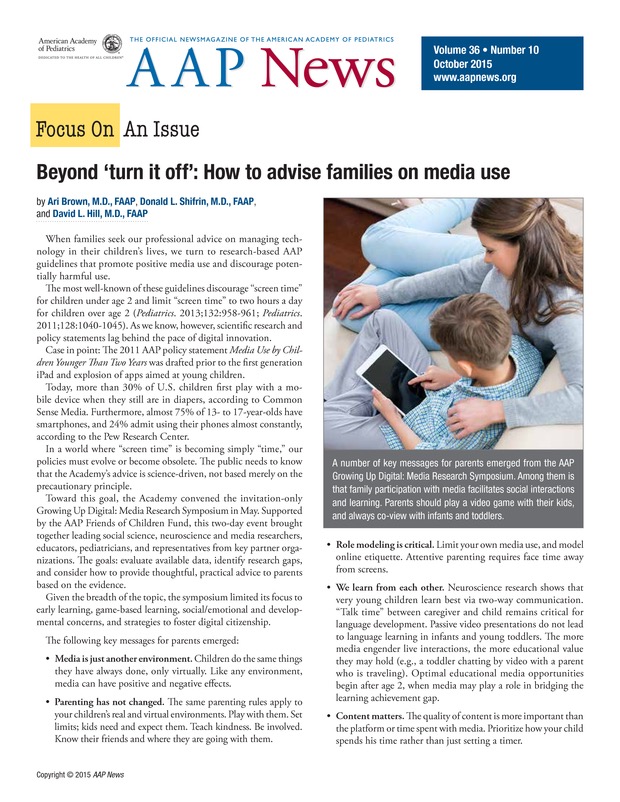
13. Limit TV time and offer prosocial and educational programming (watching or engaging in aggressive behavior encourages that behavior – Christakis, D. A., Garrison, M. M., Herrenkohl, T., Haggerty, K., Rivara, F. P., Zhou, C., & Liekweg, K. (2013). Modifying media content for preschool children: A randomized controlled trial. Pediatrics131(3), 431-438.0). The American Association of Pediatricians recommend no screen time for children younger than 2 years old (https://www.aap.org/en-us/advocacy-and-policy/aap-health-initiatives/Pages/Media-and-Children.aspx?rf=32524&nfstatus=401&nftoken=00000000-0000-0000-0000-000000000000&nfstatusdescription=ERROR%3a+No+local+token).


Compiled by Sara Torten MS, OTR/L
June 15, 2016 by pvanderheide 0 Comments

Meal Time Routine

Meal time happens several times a day which provides a great opportunity for establishing a routine that supports behavior, self-control, healthy eating habits, social skills, and self-feeding skills.

  1. Meal time should be a relaxed, enjoyable, social activity!
  2. Toddlers should eat 5-6 meals a day (every meal counts; use every meal as an opportunity for a healthy food choice rather than an unhealthy snack)
  3. Children and caregiver sit at a table during meals and engage socially. Sitting at a table also helps the child with learning to use a spoon, fork, and cup.
  4. Adult sits with child during meal and focuses on child (no distractions). This is a great time to develop language and social skills.
  5. Solids foods are provided before liquids (except water).
  6. Meals last maximum 30 minutes. Meal ends when the child signals he is done (loses interest in the food, throws food, signs “all done”, turns head to food offered) even if he only took 2 bites.
  7. Child drinks ONLY water between meals. Children have to develop hunger to prepare for the next meal, they need to learn how hunger feels to learn self-regulation of food.
  8. Every meal consists of at least 3 different food options.
  9. A new food can be put on the plate together with 2 familiar foods, the child will choose if to try it.
  10. Adult chooses what foods are offered, child chooses what and how much they will eat. Track what your child eats over a week. It is typical for toddlers to eat close to nothing some days and load up on other days. Don’t worry if your child chooses to eat only the pasta one meal as long as he eats a variety of food groups over the week.
  11. Portions are small and food is added as needed. Too much food on a plate might overwhelm a toddler and they will end up not eating.
  12. No praise or criticism for eating, no playing games to encourage eating. You can talk about the food (“yum, I love green broccoli”) but do not attach emotions to it as this opens the door for power struggles.
  13. Food is never a reward.
  14. Self-feeding is encouraged.
  15. Playing with food is allowed for 15 minutes (as long as it is not destructive), then food is removed.

Compiled by Sara Torten, MS, OTR/L

June 15, 2016 by pvanderheide 0 Comments

What to Play with your Child

Remember that young children require lots of physical activity. They learn best through doing; allow them to physically explore and experiment.

    1. Hand clapping games – sing a song (any song with a steady beat) while alternating between clapping once and doing a “double high five” with your child.


    1. Put a ball on a small blanket held up by the participants – the goal is to bounce/roll the ball without letting it fall of the blanket.


    1. Playdough


    1. Hang a large piece of paper on the wall and work together to create a picture.


    1. Ball games – roll, kick, and throw.


    1. Bake or cook together


    1. Make an obstacle course and take turns doing it (crawl under a table, climb on the sofa, walk or crawl over pillows, squeeze between the sofa and the wall).


    1. Hop scotch (for younger children you only need 2 or 3 squares)


    1. Play “store” taking turns who is the shopper and who is the buyer


    1. Play “school” taking turns being a teacher and student


    1. Play “doctor” using real band aides, take turns being the doctor and the patient


    1. Dance together taking turns “leading” and the others have to imitate the leader’s movements.


    1. Follow the leader (using different hand movements, walking, crawling, jumping, walking along line, walking backwards, walking sideways). Take turns being “the leader”.


    1. Simon says


    1. Animal walks – pretend to be a cat, elephant, crab, duck, frog; modify the way you move to imitate that animal.


    1. Make a “band” with pots, wooden spoons, bottles with beans inside, elastic bands stretched over a box. Play and sing together. Get the child to imitate a simple rhythm.


    1. Hide and go seek – take turns hiding and the other has to find you


    1. Chase game (“I’m coming to catch you”)


    1. Tug-of-war – use a kitchen towel instead of rope


    1. “three little monkeys jumping on the bed”


  1. “horse” – child rides on dad or mom’s back (or in a laundry basket or a cart) and tells parent where to go

Compiled by Sara Torten MS, OTR/L

June 15, 2016 by pvanderheide 0 Comments

Helping your Child Focus

Regulation refers to the child’s ability to focus his attention, control his emotions, and manage his thinking, behavior, ad feelings.  Young children require adults to help them regulate until they learn self-regulation skills. There are many factors that can affect the level of regulation your child (and you) might be in:

Internal causes –

  1. Food – Is the child eating too much/too little? What is the child eating (too much sugar, processed food, chocolate, food coloring?). Offer regular meals and healthy food choices.
  2. Sleep – Is the child sleeping enough (average 12 hours a day)? Is the child sleeping at night (daylight hours vs dark hours affect our circadian/internal clock)? Create a bedtime routine, and guard your child’s sleep.
  3. Temperature – Is the child too hot? Too cold? Is it very windy? Raining? Thunder?
  4. Pain – Is the child feeling well? In pain?
  5. Boredom/stress – Is the activity too easy? Too hard?
  6. Fear – is there something in the environment the child is afraid of?

External causes –

  1. Touch – to support regulation provide sustained deep pressure (proprioception). Tight Hugs.
  2. Language used – Talk in a calm, soothing voice. Be animated and use intonation. Language used should be positive.
  3. Body language – pointing, smiling, hand over hand, modeling.
  4. Movement – linear (back and forth) movement are calming (as in a swing). Proprioceptive input helps children regulate as in dancing, bouncing on knees, running, jumping. Allow your child at least 30 minutes of active play before he is required to focus or maintain regulation (at the doctor’s office for example).
  5. Vision – reduce clutter in the environment. Use a tent, box, or tunnel to provide a clutter free space your child can go into. Place toys in boxes and only keep 3-5 toys out at any time.
  6. Noise – is the environment loud? Sudden noises?

Compiled by Sara Torten MS, OTR/L

June 15, 2016 by pvanderheide 0 Comments

TV and Child Development

The American Academy for Pediatrics recommends no screen time for children under the age of 2.

How does TV affect the development of the children we serve?

  • 0-3 years old are learning language – language is learned from face to face interactions with another person (watching their mouth, expressions…) not from a cartoon (that does not move naturally). TV characters do not smile back to your child or react to their interactions.
  • 0-3 years old imitate to learn – they will imitate what they see on TV including bad behaviors (many cartoons and TV shows geared at children show dangerous behaviors, aggressive behavior, and distort reality with their cartoonish and unnatural depiction of the world). Young children are unable to separate truth from fiction.
  • 0-3 years old are at a developmental stage of sensory exploration, learning about the world – learning can only happen through DOING (can you change oil in a car after only watching a video of how to do it?). Babies that watch TV are more likely to have shorter attention spans, problems concentrating, and impulsive behavior by age 7.
  • 0-3 years old are learning how to move – sitting in front of a TV does not provide motor practice.
  • 0-3 years old are developing their vision – watching TV requires divergence (used when looking at far away objects), while reading and school work requires convergence.
  • Habits that are learned early are harder to break later.
  • TV is a 2D world vs. the real world we live in and interact in.

Referrences:

https://www.healthychildren.org/English/family-life/Media/Pages/Why-to-Avoid-TV-Before-Age-2.aspx


https://www.aap.org/en-us/advocacy-and-policy/aap-health-initiatives/Pages/Media-and-Children.aspx?rf=32524&nfstatus=401&nftoken=00000000-0000-0000-0000-000000000000&nfstatusdescription=ERROR%3a+No+local+token

Compiled by Sara Torten MS, OTR/L

54

June 15, 2016 by pvanderheide 0 Comments

June 2016 Testimonials

“You brought back light into the face and heart of Paloma. I am so grateful for all your teaching and for the times you listened to my concerns. I like what you have left me behind “my beautiful Palo-ma.” For the hundred of hours and years left behind I thank you very much. “

– Araceli Salas


“Amigo Baby was heaven sent, you truly were. You provided your knowledge and experience to help and support the intellectual and emotional development of our children.

Us as parents learned so much from you. You taught us how to become closer as a family and how to make and spend more quality time with our children. You helped us grow.

With much love, thank you Amigo Baby and may you continue helping children with needs. May your program last forever.”

-Gonzalez Family


“We would like to express our gratitude to Amigo Baby. We have seen huge improvements in her com-munication abilities. Not only is she more effective in communicating , but her vocabulary has in-creased tremendously. Finally specially thanks to you for you assistance and rapport that established with our daughter and I from day one.”

– Jimmy and Milagro Chow

June 15, 2016 by pvanderheide 0 Comments

Testimonial – Oscar Ortega

Dear Amigo Baby,

I would like to thank you and your staff Kelly Thomas, Denise Ortiz, Josefina Sanchez, Tayde Levant, Amanda Lauber, Ankur Patel, and Pablo Valez for their time and dedication they provided for my son Oscar Ortega. They have given us an incredible experience and have helped my son grow and learn how to be himself, and as parents we have learned to discover new teaching techniques to help our son develop as a child. The staff was very professional. They were always on time and when they spent the time with our son they were very attentive to him and his needs. We are first time parents and have had trouble with our son and his developments and we found this program to be very effective and helpful. From the bottom of our hearts we are grateful we had the help from Amigo Baby and your staff, without it we would be lost. Once again we are thankful.


Sincerely,

Priscilla Trejo


June 15, 2016 by pvanderheide 0 Comments

What is the Social Development for the First Year?

1 month –

  • Stops crying when picked up.

5-6 weeks –

  • First smile response.
  • Starts making sounds to express pleasure or discomfort.

2 months –

  • Smiles, kicks, and swings arms at the sight of parents.
  • Responds with sounds when talked to.

3 months –

  • Will look up at parent when being fed.
  • Shows excitement when sees bottle.
  • Shows enjoyment of being with parents, meeting new people, and watching other children by looking at them, smiling, making sounds.

4 months –

  • Turns head away from unwanted things.
  • Starts to develop a variety of facial expressions.

5 months –

  • Looks at face in the mirror but does not recognize self.
  • Babbles when content.
  • Affectionate to parents – pats them, gets excited when they approach.

6 months –

  • Loves playing with parents.

7-8 months –

  • Aware of strangers – looks at them seriously.

9 months –

  • Clear signals for likes and dislikes (stiffens body to resist for example)
  • Communicates through a variety of noises.

10 months –

  • Starts using gestures to communicate (holds arms out to be picked up for example)
  • Stranger anxiety develops.

Compiled by Sara Torten MS, OTR/L

June 15, 2016 by pvanderheide 0 Comments

Games for Visual Processing


  1. Look at books and point to pictures.
  2. When taking a walk point to things in the environment – a tree, a flower, a squirrel…
  3. Play ball – the child has to watch the ball go close and far from him/her and track its movement.
  4. Clean up – spread toys around the room and have the child find all the items that need to be picked up and put away. Initially you can help by pointing but then try encouraging the child to scan the room independently.
  5. Bubbles – popping bubbles requires visually tracking the bubbles.
  6. “Hide and seek” – either the traditional game with one person hiding and another person has to find him/her or by hiding a toy the child has to find. Toy does not need to be completely hidden – if a child has a visual problem he/she may find it challenging enough finding a toy on a table in a busy room.
  7. Draw 3 to 5 circles on a piece of paper and have the child place stickers or toys in the circles. For older children, make the task harder by making circles in different colors asking the child to place a toy in a specific color circle.
  8. Have child find a specific item on a crowded shelf (in a full fridge, in a full draw…).
  9. Crayons and paper – scribble and color pictures. Age expectations: before 24 months scribbling only. Ages 24 months-30 month copy circle and vertical line. Age 30 months -36 months copy horizontal line. Age 36 month and older some kids can copy a cross.
  10. I spy – have child find a specific item in a picture in a book or a magazine picture. You can use the following phrase “I spy with my little eye a…. (name item)” then have your child look for it, take turns naming an item and looking for it.
  11. Draw the child’s initial in a big letter and have child place stickers on the lines of the letter. Child could also use glue to stick beans or pasta on the initial.


Compiled by Sara Torten MS, OTR/L

April 21, 2015 by pvanderheide 0 Comments

Testimonial – Kamilla

Today, three years ago our little one, Kamilla was born. We want to thank God, our family, and Amigo Baby. Our team consisted of therapists, coordinators, and services. Together we all took on a journey, in which we have gone through frustrating moments and hope. We took a stroll down beautiful moments, and although some were darks ones; Kamilla brightened those moments with her contagious smile and her ambition to learn. Kamilla has filled our lives with happiness. She has demonstrated to us that any obstacle no matter how difficult can be accomplished. Oh, and how could we forget every time Kamilla hit a milestone, we as parents together with her sisters would jump up and down out of excitement. Just like that, as Kamilla’s parents we can say, and be an example to the entire world. A child is capable of showing their abilities as long as we, as parents are there. As for us, we will continue our journey. As for our team, the therapists, coordinators, and services all we have left to say is NOT goodbye but a see you later. Thank you so much for accompanying us from the very start of this journey.